


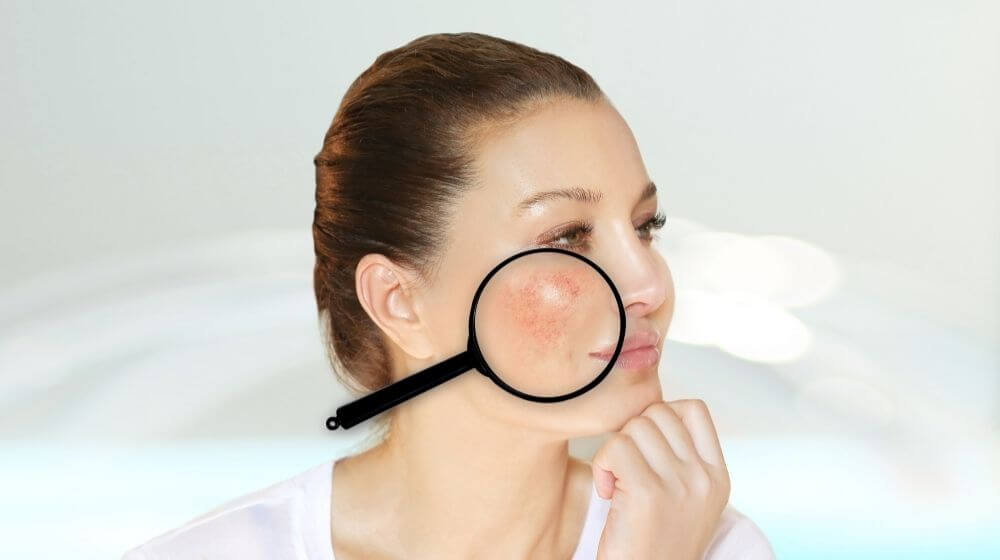
Rosacea is a long-term skin condition that causes redness and often small, red, pus-filled bumps on the face.
Common Risk Factors Of Rosacea
- Gender- Rosacea develops in both males and females. But women have more risk of developing rosacea than men. But In men, rosacea tends to become more severe.
- Genetics- Patients having a family history of rosacea have chances of developing rosacea. Studies have been seen that people with rosacea are four times more likely to have a family history of the rosacea than people without the condition.
- Age-It has mainly been seen in the age group between 30 to 60. Also tends to develop in women who are going through menopause.
- Skin color- It is typically seen in patients with fair skin color.
- Sun exposure- Rosacea is photosensitive. It worsens after sun exposure.
- Celtic or Scandinavian ancestry.
Pregnancy And Rosacea
At the highest peak of happiness in life, most women experience embracing rosacea. In pregnancy, due to hormonal changes and immunologic alteration, women may tend to develop rosacea. In some cases, existing conditions of rosacea may get worsened during pregnancy or after childbirth.
As pregnancy progresses, the serum level of progesterone and estrogen is altered. This leads to inflammation and immunologic alterations. We can’t avoid this alteration but proper cautious treatment to symptoms will slow down rosacea progression.
Medication that does not have a teratogenic effect can be used to overcome rosacea symptoms. Topical and some oral medications treatment should be followed to avoid further complications. Topical medications like creams of azelaic acid, metronidazole, doxycycline should be preferred. Women should wash their faces twice daily with lukewarm water. Staying away from other triggering things will help to slow down rosacea progression.
Symptoms:
On facial region-
- Facial redness particularly on cheeks, nose, forehead, etc.
- small, red, pus-filled bumps on the skin
- Small red, purple, or blue lines of blood vessels on the face.
- Enlarged blood vessels of the face
- Visible broken facial blood vessels/capillaries.
Swollen, red, bumpy nose-
- The sensation of Stinging and burning of the skin
On ocular region-
- Bloodshot and watery eyes
- The sensation of burning and stinging of the eye
- Blood vessels of eyelids seem to be broken.
Causes
The exact cause of rosacea is not a known still date. According to studies, Rosacea is associated with deformity in blood vessels and the immune system. Due to this, many patients show common abnormalities like an overactive immune system, extreme environmental conditions, hereditary, etc. Genetic and environmental factors aggravate the condition.
Inheritance- People having a family history of rosacea, have more chances of developing rosacea. This is because of the inheritance of an abnormal gene. In inherited rosacea, the Human leukocyte antigene complex and Helicobacter pylori (H. pylori) S-transferases gene show variations.
H-pylori Infection- Helicobacter pylori (H. pylori) is a bacteria that causes chronic gastritis and gastric ulcers. These bacteria stimulate the immune system to release various chemical mediators which are responsible for inflammation. Due to inflammation risk of developing rosacea is increased.
Skin Mite- Demodex is a harmless parasite that lives on the skin. But it may trigger rosacea when their number is increased. The risk of experiencing Demdex rosacea symptoms is more in-
- Immunocompromised patients -like AIDS patients.
- Persons taking a corticosteroid. These mites may disrupt the skin barrier by triggering an abnormal immune response, which leads to developing rosacea.
Extreme Hot or cold weather may lead to worsening rosacea.
Protein cathelicidin (protect skin from infection. A decrease in cathelicidin level may increase the risk of developing rosacea.
Photosensitivity- sunlight may increase oxidative stress due to these skin cells getting damaged. This may trigger rosacea.
Emotional stress.
Alcohol, caffeine, spicy food, Hot drinks.- These substances may lead to the dilation of blood vessels. So these substances increase the risk of developing rosacea.
Treatment
Currently, an exact treatment for rosacea is not available. But various treatment approaches are performed to cure symptoms.
Self-care
Once you find out the triggers of your rosacea, you will find a way to avoid them.
- Avoid direct sunlight exposure
- Avoiding consumption of alcohol and caffeine products.
- Avoiding spicy foods
- Avoiding direct eye and sunlight contact.
- Use a moisturizer. Moisturizers keep skin hydrated and decrease the risk of rosacea.
- Use on sunscreen
Medication
- Azelaic acid reduces inflammation and erythema. It is available in a topical formulation like creams.
- Acne drug- Isotretinoin, Retinoids-These drugs help to reduce the appearance of broken red veins on the face.
- Anthelmintics-Ivermectin, oxymetazoline kills the excessive Demodex mites.
- Antibiotics- like tetracycline, doxycycline, Azitromycin, Amphicilline treat Rosacea-associated H-pylori infection. These are available as oral tablets or capsules.
- Dapsone.
Advice to readers
Proper treatment of rosacea will definitely reduce your symptoms and heal it. If you feel embracement due to unattractive appearance then always keep in mind that real beauty is in your soul. So don’t be shy, get proper treatment, and meet people confidently.